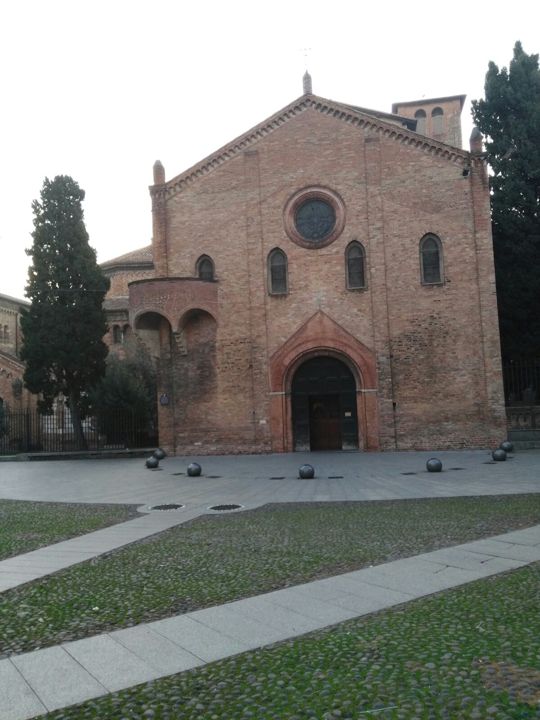
San Martino and the new wine
On 11 November the barrel is opened, chestnuts go on the fire and, once upon a time, farm families loaded the cart to move house. The story and rituals of an autumn feast that in Bologna smells of osteria.
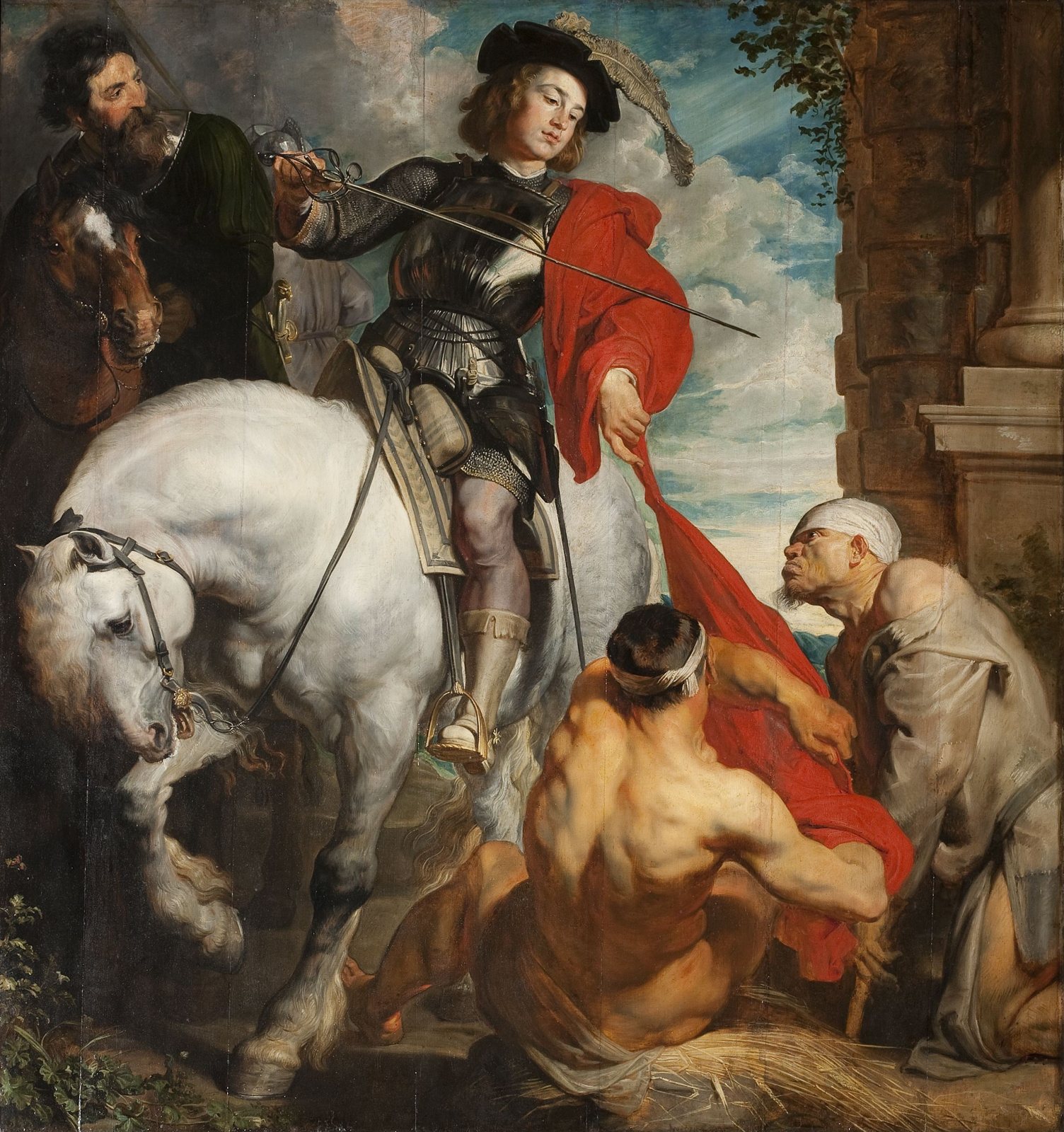
Antoon van Dyck, San Martino divide il mantello con il povero (1618 circa) – Wikimedia Commons · Pubblico dominio
In Bologna, November arrives with fog, the first scarves and a date the locals never write on the calendar because they know it by heart. 11 November is San Martino, St Martin’s Day: the day when, as the Italian proverb goes, every must becomes wine. In the osterie – the old-fashioned wine taverns – the new wine is opened, chestnuts crackle on the fire and someone, inevitably, starts talking about the weather.
Who was Martin?
Martin was born around 316 in Pannonia, in today’s Hungary, and as a young man ended up in the Roman army. His most famous story takes place at the gates of Amiens, in Gaul, on a freezing day: he meets a half-naked beggar, draws his sword and cuts his cloak in two to give him half. That night, tradition says, Christ appeared to him in a dream, wrapped in that very half-cloak.
Later Martin left the army and became bishop of Tours. He died at Candes in 397, and his feast falls on 11 November. Ever since, his name has been tied to a precise moment of the year: when the work in the fields ends and the accounts are settled.
The summer that lasts three days
According to legend, as soon as Martin shared his cloak the rain stopped and a warm sun came out, as if the sky wanted to thank him. Hence the estate di San Martino, “St Martin’s summer”: those mild days that sometimes break the grey of early November (in English you might call it an Indian summer). The Italian saying is precise: it lasts three days and a little bit. Not one more, not one less. In Bologna, those three days are best enjoyed sitting outside, under a portico, glass in hand.
Open the barrel
Wine comes into it for reasons of calendar, not holiness. The grape harvest ended a few weeks earlier, the must has done its work in the vats, and by mid-November it is time to taste it. At San Martino you tap the barrel, they used to say in the countryside: the young wine was opened and you found out how the year had gone. Next to the glass, chestnuts, which ripen in exactly this season: a San Martino castagne e vino, “at St Martin’s, chestnuts and wine”, as another saying goes.
Bologna’s osterie are the natural place for this ritual. No official event is needed: a wooden table, a quartino (a small carafe) of new wine and a paper cone of roast chestnuts will do. That’s how we like it.
“Doing a San Martino”
There is also a less cheerful San Martino, one that grandparents remember well. For centuries, 11 November was the day when, in the countryside of northern Italy and here in Emilia-Romagna too, farm contracts expired, above all those of mezzadria, the sharecropping system in which a peasant family worked a landowner’s farm in exchange for half the harvest. Accounts were settled between landlords and farmers, and if the contract was not renewed, the sharecropper’s family had to leave the farm.
So, on St Martin’s Day, everything was loaded onto the cart: furniture, tools, animals, the whole family. That is where the expression fare San Martino, “to do a San Martino”, comes from: in many parts of Italy it still means to move house, or at least to clear out the cellar. Sharecropping is long gone, but the saying has stayed.
The horns of Santarcangelo
In Romagna, San Martino also has a more mischievous side. In Santarcangelo, during the saint’s fair, a pair of enormous horns is hung under the arch of Piazza Ganganelli. Tradition has it that if they swing while a man walks underneath, he has been betrayed by his wife (in Italy, “horns” are the mark of the cuckold). It all comes from the livestock fairs held in these days, and from the becchi, the billy goats, that were sold there. Romagna’s imagination did the rest.
Carducci and the smell of the vats
The most famous San Martino in Italian literature was written by an adopted Bolognese. Giosuè Carducci came to the University of Bologna in 1860 and taught there until 1904; he lived in the city until his death in 1907. His collection Rime nuove contains the poem San Martino, which generations of Italian children have learned by heart at school. It opens with fog climbing the bristling hills in a drizzle, and soon after comes the sharp smell of wine fermenting in the vats. November, in a few lines.
A San Martino in town
If you want to pay your respects to the saint, Bologna has his church too: San Martino, in Via Oberdan, a short walk from the Two Towers. From the 13th century it was the church of the Carmelite friars; the Gothic façade was rebuilt in 1879, and above the side door there is a 16th-century relief showing St Martin. Inside are works by Francesco Francia, Amico Aspertini, Lorenzo Costa and even a fragment of a fresco by Paolo Uccello. Few tourists, lots of silence.
Our tip. On 11 November take a walk in the centre, step into San Martino for a moment, then look for an osteria serving new wine and chestnuts. If the sun is out, it’s St Martin’s summer: make the most of it, it doesn’t last.
Take a piece of this story home
Bologna travel guide
An up-to-date guide for first-timers and for those hunting hidden details.
View on Amazon
See our suggestions As an Amazon Associate, Socmel! earns from qualifying purchases.